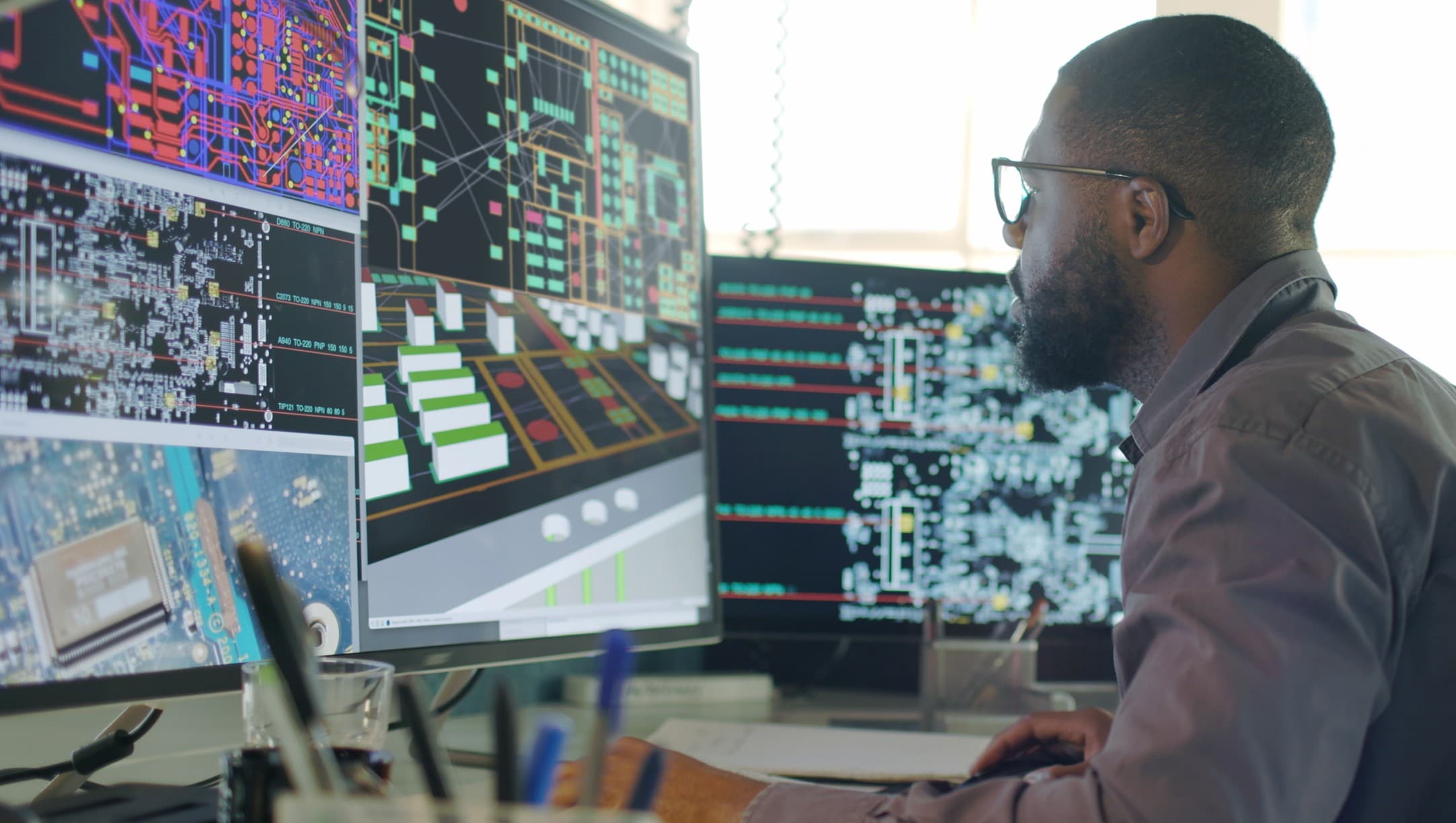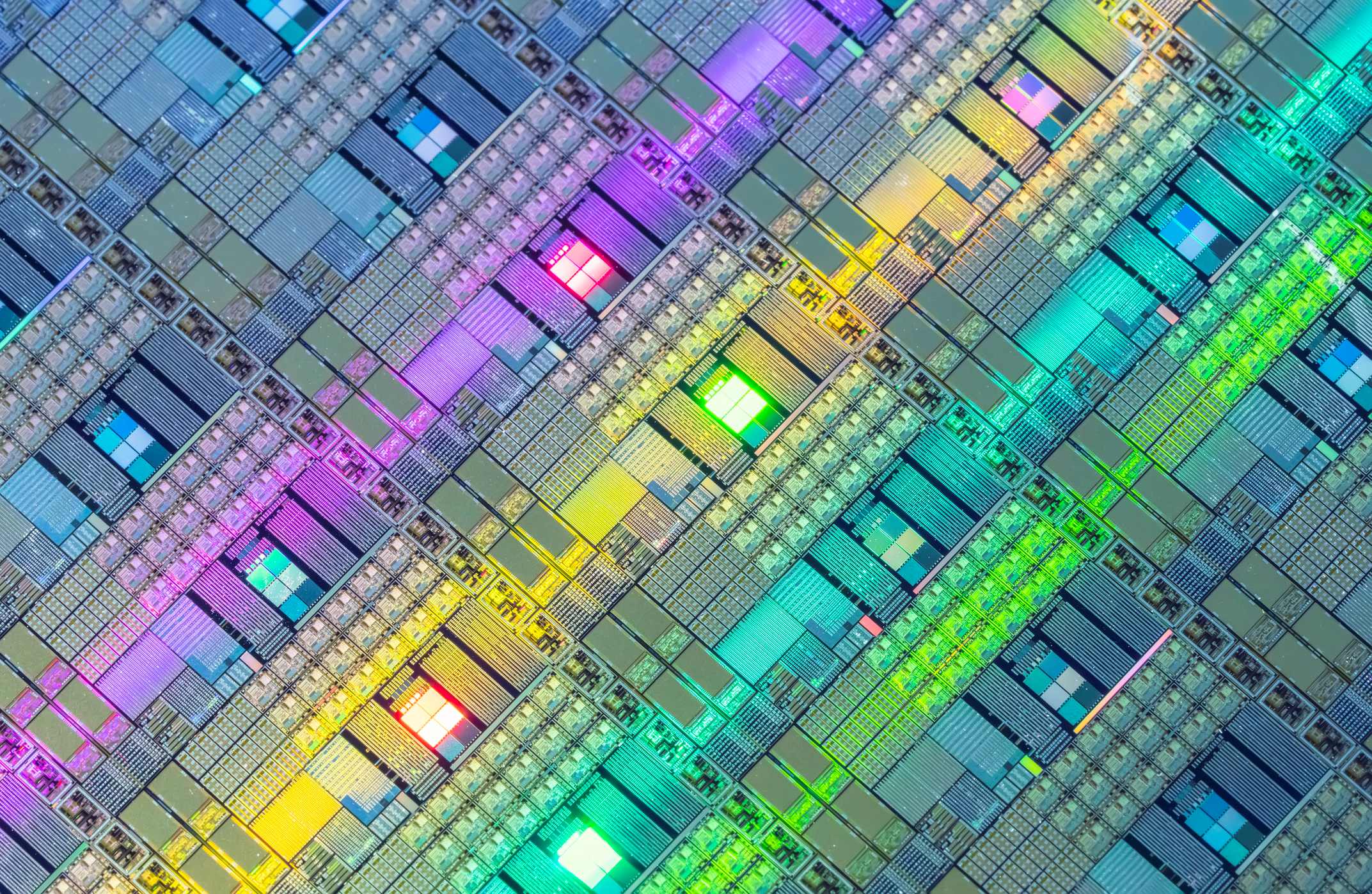


More than thirty years after its introduction, the GPU has far outgrown its name. Originally a ‘graphics processing unit,’ it now doubles as the AI datacenter’s workhorse.
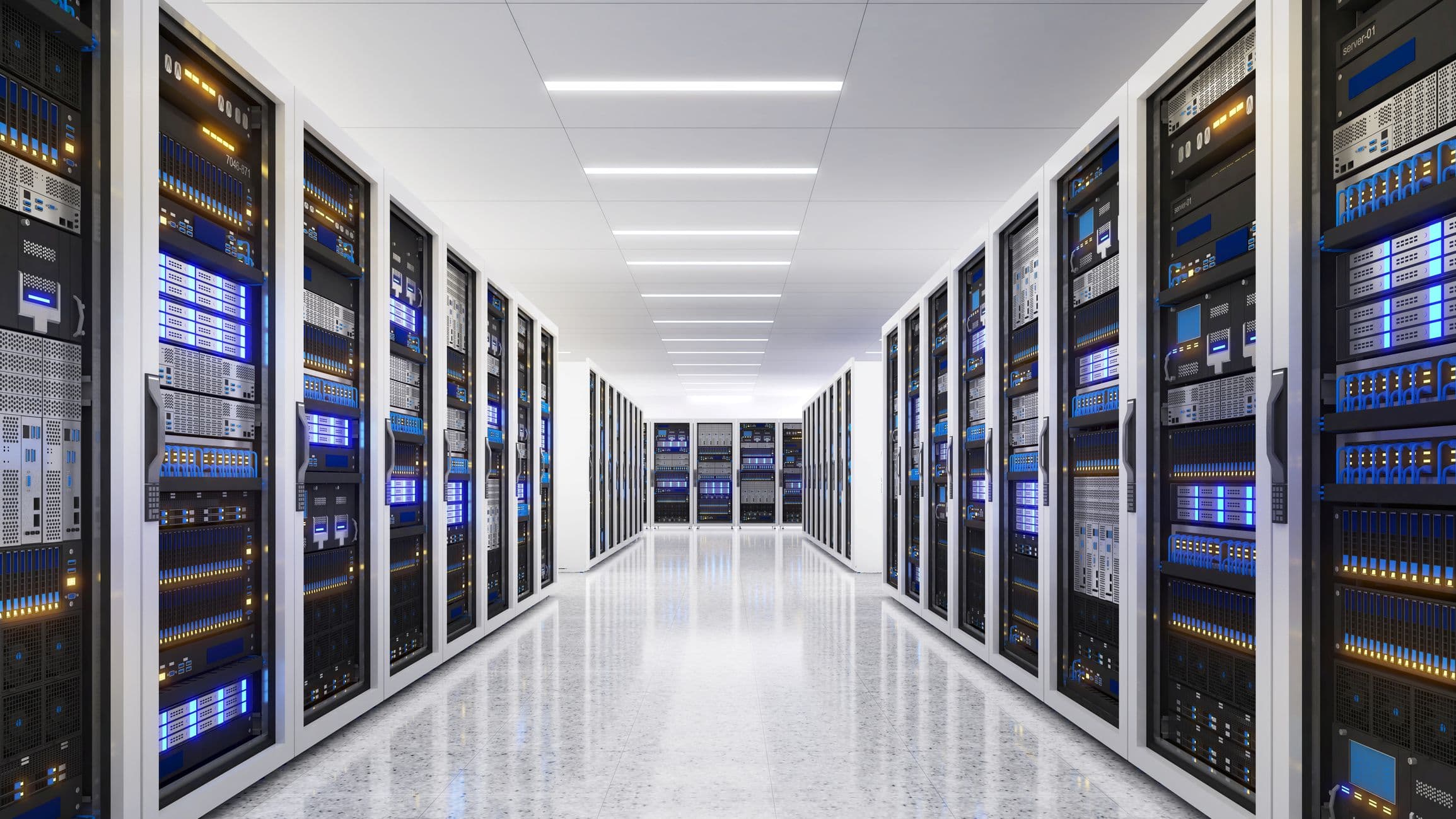
GPUs are the workhorses of today’s AI datacenters.
But there’s a growing debate over whether the GPU is truly the optimal solution for the wide variety of demanding AI operations. Its contender for that role is the ASIC: a chip tailored to a specific application — in this case, AI processing.
Where exactly does the time-tested GPU fall short? And does it really make (business) sense to address that through the difficult process of developing a custom chip? Let’s take a closer look.
Looking for a partner to ease the ASIC development process from design to manufacturing?
ASICs and GPUs side by side
GPUs and ASICs have a lot in common. Both are used as AI accelerators, speeding up workloads by executing large numbers of operations in parallel. They rely on specialized architecture and logic to handle the matrix and tensor computations at the core of modern AI. And in datacenter environments, both serve the same purpose: to deliver faster, more efficient AI processing than a traditional CPU could provide.
The differences are in the technical details, and in particular trade-offs when it comes to performance and costs.
Under the hood: comparing the core technologies of ASICs and GPUs
The architecture of a GPU derives from its origin as a graphic accelerator, requiring massive parallel processing. It was then adapted for general compute and AI. A GPU consists of thousands of cores, specialized tensor units, and high-bandwidth memory (HBM).
One of the main bottlenecks in GPU‑based AI processing is the ‘memory wall’: the slowing down of the system because the memory access can’t keep up with processing speeds. Further reducing the distance between compute and memory, for example 3D stacking the HBM on top of the GPU, could help overcome this, although this threatens to increase the temperature and ‘cook the GPUs’, a problem that was recently addressed by imec researchers.
One of the main advantages of a GPU is its versatility. The same platform can support AI training and inference, as well as graphics. Consider it the Swiss army knife of compute.

A GPU is like the Swiss army knife of compute.
ASICs, on the other hand, are like precision tools. They sacrifice certain general-purpose features, allowing more focus on the core task, such as matrix and tensor math – resulting in higher performance.

An ASIC is like a precision tool for a specific computing task.
A word about AI hardware performance
What does the potential higher performance of ASICs vs GPUs for AI entail? Three metrics are key when evaluating AI hardware:
- throughput: how many samples or tokens can be processed per second
- latency: how long it takes to complete one training or inference step
- energy-efficiency: how much computation can be delivered per watt of power consumed
ASICs can beat GPUs on all three accounts. But it’s important to know that these performance metrics not only derive from the hardware itself but also from how it is used. ASICs only achieve their maximum performance levels when:
- The workload matches the specialization of the ASIC.
- The hardware utilization is maximized through a continuous supply of data.
Unless these conditions are met, the GPU’s versatility tips the balance in its favor, because it can stay busy across a wider range of workloads, reducing idle time and improving ROI.
After all, as we will explore, AI accelerators come with a considerable price tag.
Counting the costs: development, deployment, and risk
The astronomical infrastructure investments that come with the current AI boom are a hot topic. A lot of that money goes to processing power, as today’s most advanced AI GPUs command prices in the neighborhood of fifty thousand dollars per chip. GPUs represent 40-45% of a datacenter’s CAPEX.
How does an ASIC compare to a GPU in terms of price? This article takes a deep dive into the benefits and costs of custom chips. Long story short: initial ASIC development costs are high, but their unit price is low. The expected volume is therefore a major cost consideration when you’re deciding between your own ASIC or a commercially available GPU.
But the hardware acquisition cost, or cloud rental fee, is only one of the elements of the TCO of an ASIC or a GPU:
- Power and cooling costs also need to be taken into account. Here, ASICs often have an edge because of their higher energy efficiency.
- Deployment costs are often overlooked. Personnel and software expenses are necessary to integrate, tune, and operate the hardware reliably at scale. These are often lower for GPUs, as they come with mature software stacks and widely available expertise.
Finally, there are risks to consider as well. An ASIC development project comes with a certain risk, but so does limiting yourself to one external vendor of GPUs.
ASIC vs GPUs: choosing the best tool for your job
Now that we’ve established what differentiates ASICs from GPUs, it’s clear that the ultimate AI accelerator doesn’t exist. Just like you wouldn’t reach for a screwdriver to cut a branch, no single AI chip fits every job.
Performance is key
For AI model training, GPUs remain the obvious choice. Training is a fast moving, highly iterative process that demands flexibility, mature software support, the ability to handle evolving model architectures and, crucially, high throughput to push as many tokens or steps per second as possible during long runs. These are all areas where GPUs still excel.
By contrast, in inference workloads the priorities often flip: low latency and energy efficiency tend to dominate, which is why ASICs can be the better fit – an important consideration as the datacenter market is moving from training to inference.
This is especially the case for edge AI implementations that operate under tight power and thermal budgets, must respond in real time despite intermittent connectivity, and keep data on-device for privacy reasons.
For example, FemtoAI developed an ASIC for low-power AI noise reduction in hearing aids:
Beyond performance: make the economics work
Performance isn’t the whole story. Even when an ASIC can beat a GPU on efficiency for a specific inference workload, it only makes sense if the economics across the product’s lifetime add up.
First, consider algorithm stability and production volume. ASICs shine when the workload is well‑understood and unlikely to change. And as we established earlier, they demand meaningful scale. If your models or requirements are still in flux, or if volumes are modest, the GPU’s versatility and faster time‑to‑market often win out on total cost.
Then weigh ecosystem and talent, alongside supply‑chain exposure. GPUs benefit from mature software stacks and a deep pool of engineers who know how to deploy and operate them. Replicating that with custom silicon can add real integration and maintenance overhead. On the supply side, ensure you can actually source what you plan to build: design and IP capabilities, process node access, and packaging capacity can all become gating factors.
White paper: Your practical guide to ASICs
The hybrid path
In industry today, we see that the ‘ASIC vs. GPU’ debate is giving way to a pragmatic hybrid model. Organizations increasingly deploy:
- GPUs to explore, iterate, and train, where flexibility and throughput dominate.
- ASICs to serve at scale, where latency and energy efficiency can tilt the economics.
Put simply: keep both tools in your toolbox and use each where it shines.
Want to discuss your ASIC project? Click the contact button below to set up a meeting with our team.